Food Processing
Renewable Energy Infrastructure for Temperature-Controlled, Continuous Operations
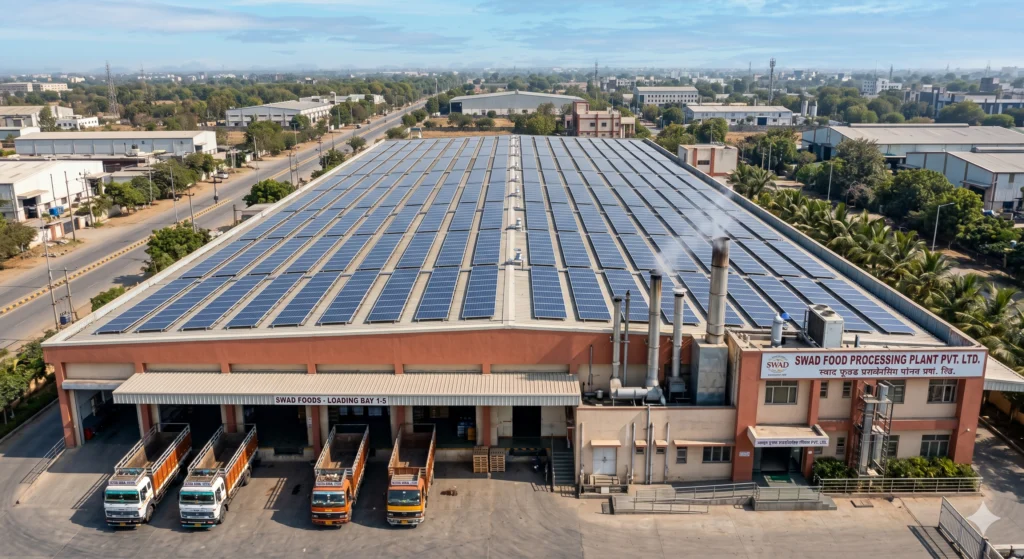
End-to-end renewable energy architecture for food processing plant
The food processing industry in India needs dependable, cost-efficient energy to support continuous operations, refrigeration, and quality control.
Renewable energy solutions, solar EPC, wind power integration, O&M, and asset management help food businesses reduce electricity costs, improve operational resilience, and meet sustainability targets.
A well-planned net-zero energy transition also enhances brand value and supply chain performance while generating attractive ROI through energy savings, better efficiency, and smarter power procurement.
The Challenge
A food processing facility sought to reduce long-term energy cost exposure and limit diesel reliance while maintaining strict temperature control.
The plant operated under:
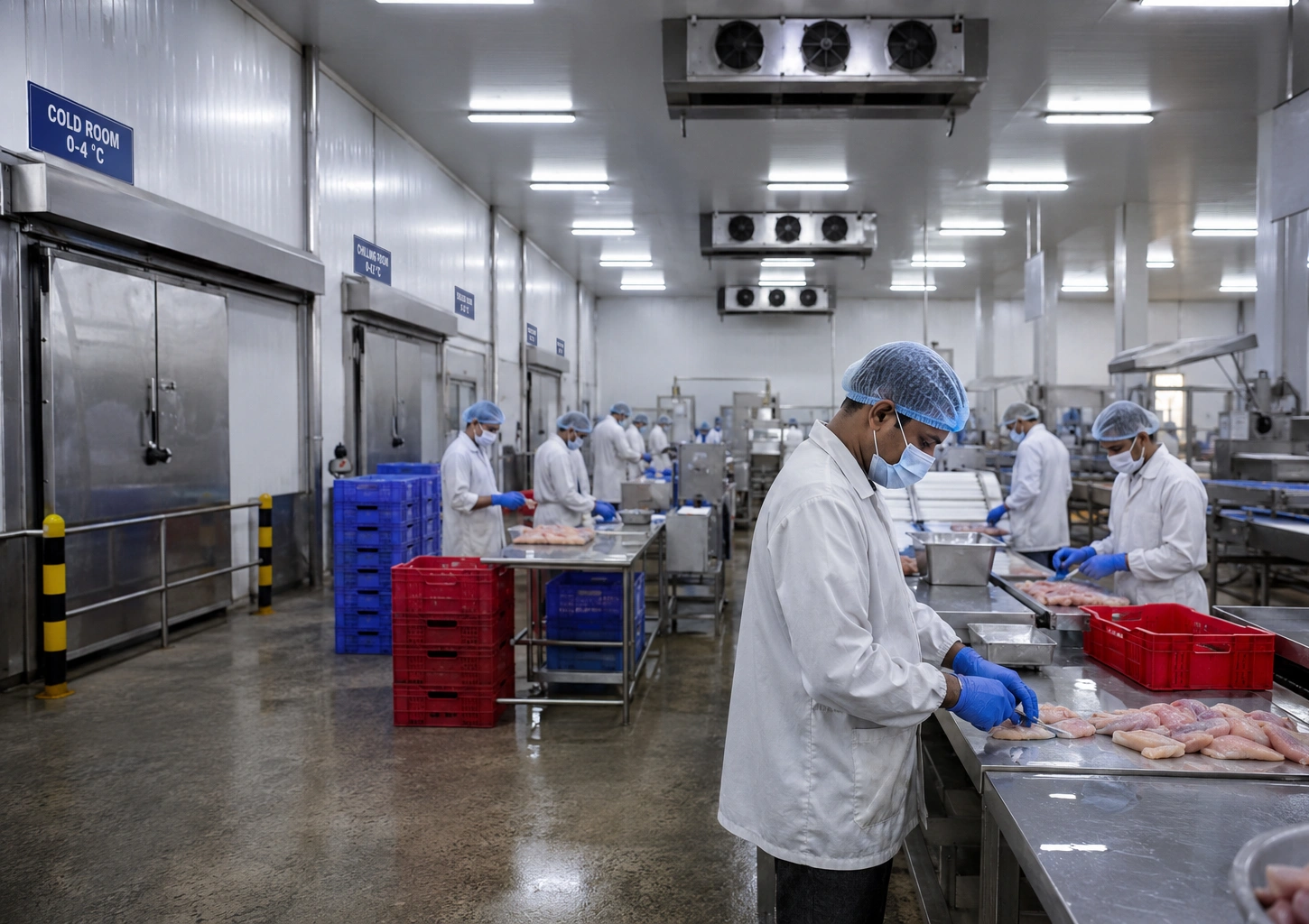
24×7 refrigeration-driven base-load
Seasonal processing peaks
Grid variability
Long operating hours influencing tariff exposure
No structured renewable roadmap
Renewable energy adoption required structured planning across sourcing, engineering, execution, and operations.
Our Approach
Multi-Pronged Solutions Approach
The food processing industry in India needs dependable, cost-efficient energy to support continuous operations, refrigeration, and quality control.
Renewable energy solutions, solar EPC, wind power integration, O&M, and asset management help food businesses reduce electricity costs, improve operational resilience, and meet sustainability targets.
A well-planned net-zero energy transition also enhances brand value and supply chain performance while generating attractive ROI through energy savings, better efficiency, and smarter power procurement.
- Renewable sourcing aligned to refrigeration-driven base-load demand
- Techno-commercial feasibility and engineering validation
- EPC governance, commissioning, and execution oversight
- Long-term renewable asset monitoring and maintenance
- Tariff optimisation and energy cost visibility
- Reliable renewable integration for continuous operations
The solution was an end-to-end feasible renewable energy architecture to meet the operational needs.

Full-Lifecycle Renewable Integration for a
Food Processing Facility
A food processing operator partnered with SunDesh to transition toward renewable energy while preserving temperature stability and operational continuity.
Under Energy Management, a structured roadmap aligned renewable sourcing with stable refrigeration demand. Feasibility & Design services validated site conditions, techno-economic viability, and grid-integration readiness before committing to capex.
During execution, Construction Management governed procurement, engineering oversight, and commissioning validation to ensure disciplined delivery. Following grid synchronisation, Asset Management & O&M established continuous monitoring, preventive maintenance protocols, and performance benchmarking.
The engagement delivered a renewable framework calibrated to refrigeration-driven base load, balancing sustainability goals with operational safeguards.
Outcome
The engagement resulted in:
- Renewable sourcing aligned to continuous refrigeration demand
- Structured capex deployment
- Controlled execution risk during implementation
- Strengthened long-term tariff visibility
- Ongoing performance governance post commissioning
- Scalable foundation for future renewable expansion
Our Projects
Vertical Axis Wind Turbine
Details:
- Low-Wind Efficiency
- Urban Integration
- Noise Reduction
Thermal Storage Plant
Details:
- Molten Salt Tanks
- Heat Preservation
- Night Discharge
Waste-to-Energy Hub
Details:
- Plasma Gasification
- Steam Turbines
- Ash Recycling
Frequently Asked Questions for the Food Processing Industry
FREQUENTLY ASKED QUESTIONS
How can cold storage facilities benefit from solar energy?
Solar energy helps cold storage facilities reduce high cooling energy costs, improve power reliability, and support uninterrupted temperature-controlled storage.
What factors should food processing industries consider before adopting solar energy?
Food processing industries should evaluate energy consumption, refrigeration load, available space, project feasibility, and operational requirements before implementation.
What is solar cold storage?
Solar cold storage uses solar energy systems to power refrigeration and cooling infrastructure for storing agricultural products, food items, and perishable goods.
Start With Your Demand
Effective energy solutions are not selected;
they are designed.
If your operations are growing, evolving, or becoming more complex, the right place to begin your green transition is by understanding your energy needs. We help you do that.